

Alumni Spotlight: Samuel Brown
October 07, 2026
Over the past 110 years, more than 200,000 individuals have graduated from Webster University around the world.
Join Us As We Highlight Their Webster Stories
Meet Samuel Brown, PhD, who earned a Master of Business Administration from Webster in 2006 and is currently an independent researcher, author and AI Governance Advisor. He recently retired from federal civilian service with the U.S. Army Corps of Engineers.
What enticed you to choose Webster for your degree?
I wanted to complement my military leadership experience with a stronger foundation in business and management. Webster offered an opportunity to connect practical experience with academic learning and prepare for the next stage of my career. Earning my MBA was an investment in my ability to lead people, manage resources and understand organizational decisions more fully.
What stood out about your studies at Webster?
I attended all my Webster MBA classes at night at Patrick Air Force Base. Studying at a place connected to my early life made the experience particularly meaningful. As a teenager, I had been paid to play the bugle for military ceremonies and a veteran’s funeral through Patrick. Returning there years later as an MBA student connected two very different chapters of my life — early service and continued education.
How did your Webster degree help advance you in your career?
My Webster MBA strengthened the business foundation I carried into my Department of Defense civilian career. My work included contracting with the U.S. Air Force, systems administration in Saudi Arabia and procurement analysis and supervisory leadership with the U.S. Army Corps of Engineers. The degree helped me connect operational decisions with organizational goals and accountability. It also became part of the foundation for my doctoral studies and my writing on AI governance and implementation.
What is something valuable you have learned during your career?
I have learned that leadership requires listening closely to the people doing the work. A strategy may look excellent on paper, but its success depends on whether people understand it, have the resources to carry it out and can raise concerns. That lesson applies equally to military operations, public administration and AI adoption.
What advice would you give to others who are considering Webster for their degree?
Be clear about what you want to learn but remain open to where the experience may take you. Bring your professional and life experience into your studies, ask questions and apply what you learn to real problems. Education can prepare you for opportunities you have not yet imagined. My MBA became part of a journey that eventually led to a doctorate, published books and a new focus on responsible AI.
What has your life journey looked like?
I grew up in Cape Canaveral, Florida, and now live in Mount Holly, New Jersey. My journey has included 24 years of active-duty military service from 1978 to 2002, followed by Department of Defense civilian work with the U.S. Air Force, OPM-SANG in Saudi Arabia and the U.S. Army Corps of Engineers. Along the way, I continued my education, earning my Webster MBA in 2006 and completing my PhD at National University in February 2026. After retiring from federal civilian service in August 2026, I am continuing to contribute through research, writing and AI governance work.
What was your first job, and what do you remember most about it?
One of my earliest paid responsibilities was playing the bugle for Patrick Air Force Base. As a teenager in Brevard County, Florida, I was paid to play Taps at a veteran’s funeral, as well as Assembly and Mess Call for official military dining-in ceremonies. Being entrusted with those duties at a young age gave me an appreciation for service, tradition and responsibility.
My teenage work also included McDonald’s and teaching lifeguarding, swimming and CPR through the American Red Cross. Those experiences introduced me to serving people in different ways and helped lay the foundation for my later military and public-service career.
Is there anything else you’d like to share?
In February 2026, I completed my PhD at National University. My dissertation examined healthcare professionals’ adoption of AI-driven clinical decision support systems, connecting my interest in technology with the human and organizational factors that influence its use.
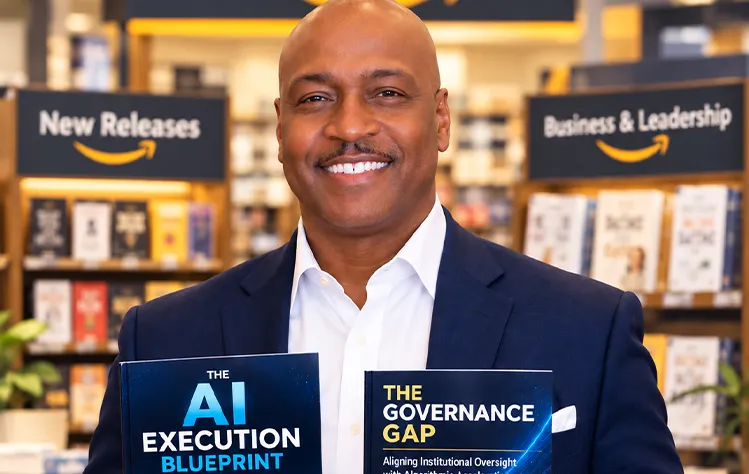
I have also published two books: “The Governance Gap — Aligning Institutional Oversight with Algorithmic Acceleration,” and “The AI Execution Blueprint — How Leaders Build Intelligent Workflows, Automate Work, and Govern AI Across the Enterprise.” Together, they explore how leaders can adopt AI with clear accountability and translate ideas into practical workflows.
Completing a doctorate and publishing two books in my 60s has been especially meaningful. I hope my story encourages others to keep learning and contributing. Retirement has opened another chapter in which I can bring decades of service and leadership experience to new challenges.